

<img height="1" width="1" style="display:none" src="https://www.facebook.com/tr?id=1244923805528197&amp;ev=PageView&amp;noscript=1">
Skip to content

CASE STUDY

Safer on the Job: How Movement Training Protects Firefighters

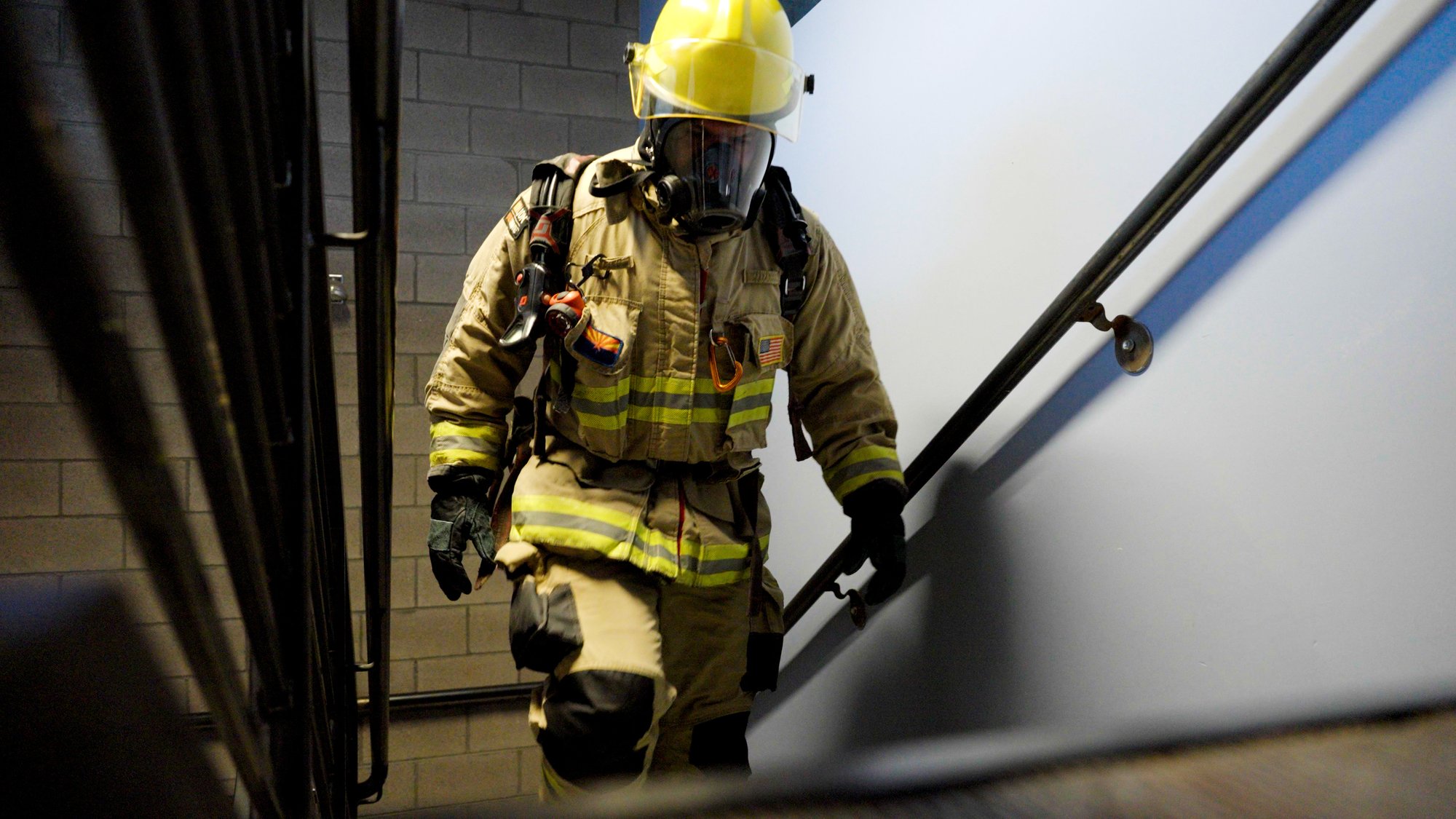
A firefighter walks up a staircase

THE CHALLENGE

Fit for the Test, but Not for the Job

Firefighting punishes the body. Forcing doors open, dragging a hose up a stairwell, carrying people out of a burning building.

The job loads the spine, hips, and shoulders in exactly the ways that lead to injury. And the toll is well documented: Sprains and strains account for roughly half of all line-of-duty injuries, and back injuries end many careers early.

The standard response has always been to make firefighters fitter, but raw fitness doesn't always hold up on the fireground. Staying safe on the job would take more than conditioning. It would take retraining how firefighters move.

THE STORY

A Controlled Study, Built With Firefighters

Exos trains firefighters across the country through its Firefighter Mentorship Program. Fighting fires is physically demanding work, done by people whose safety and livelihoods depend on their bodies holding up over decades.

Whether or not a firefighter’s body holds up in the long run depends largely on their movement quality, one of the strongest predictors of long-term injury risk. So to test what actually builds that durability, Exos partnered with the University of Waterloo on a controlled study.

The question was concrete: Can coaching for movement quality set firefighters up for longer, healthier careers?

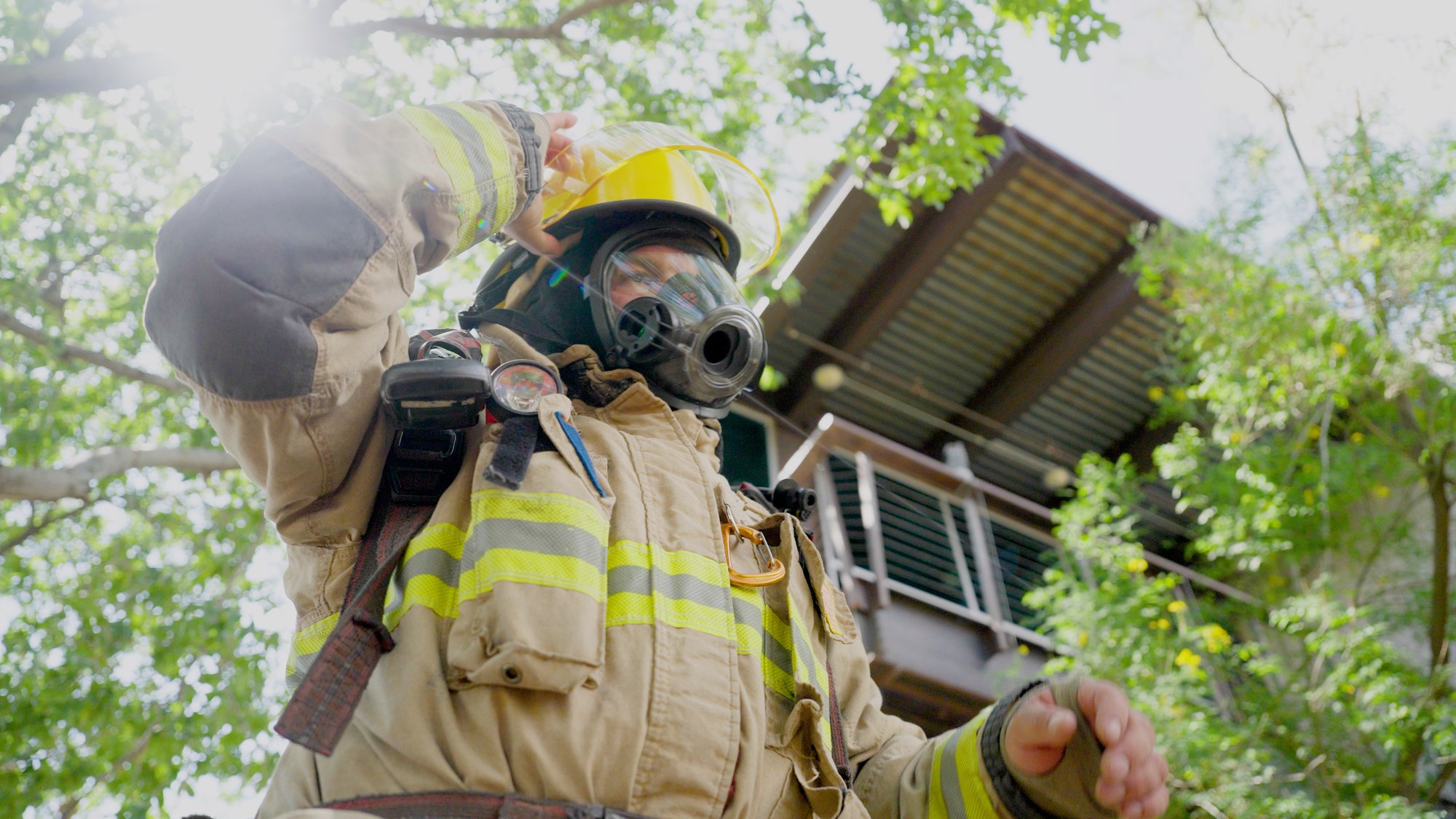
A firefighter adjusts his helmet under a tree in sunlight

A Custom-Built, Scalable Model

Exos doesn’t do cookie-cutter employee engagement solutions. Each of our programs is personalized to our clients’ unique needs, and they go far beyond just the fitness center. 

anglephoto1

Standardized Wellness Programs

Through rapidly changing eras including COVID-19, Exos consistently rolled out group fitness, nutritional support, mental well-being, and virtual employee engagement solutions to meet the evolving needs of employees. During Pfizer’s COVID-19 vaccination program, Exos teams supported operations by checking in employees and leading movement sessions in line.

Strategic Design & Build Services

Our world-class space design and development team designed and built six new facilities and renovated six existing ones across the U.S. This included redeploying $300,000 in exercise equipment assets, obtained through acquisitions, to generate significant cost savings and upgrade Pfizer’s portfolio of workplace amenities.

Service Request Platform

Exos implemented an online service request system to support streamlined coordination of Recharge Breaks and other wellness offerings. This platform has supported global program delivery across Pfizer's workforce.

Global Hybrid Expansion

Exos virtual coaching gave Pfizer employees across the globe access to wellness programming, regardless of location or remote status.

Centralized Management

Exos implemented a unified standard operating model across 14 locations to ensure a consistent member experience. This included revenue/expense management, programming, staffing, and data tracking.

Recharge Breaks Deployment

As of January 2025, Exos officially deployed the three standard Recharge Break formats (for energy, creativity, or calm) across Pfizer. These sessions are delivered by both on-site and virtual coaches. To date, the team has completed 198 sessions with a total attendance of 8,255.

Data-Driven Efficiencies

Our team implemented Net Promoter Score (NPS) tracking, utilization data, and outcome monitoring to continually measure impact and improve how we serve each member.

logo-svg-dark

THE SOLUTION

A Controlled Test of How Firefighters Train

Isolate One Variable: The Coaching

To find out if coaching could improve movement safety, Exos and the University of Waterloo ran a study built to isolate a single variable: the coaching itself. Same exercises, same effort. The only difference was whether firefighters were taught how to move.

Test the Five Movements Every Physical Job Depends On

Fifty-two firefighters completed a comprehensive fitness test, a Functional Movement Screen, and a biomechanical analysis. These analyzed the five movements common to nearly every physical job: lift, squat, lunge, push, and pull.

Start With Matched Groups

Two groups trained three times a week for twelve weeks, while a third kept its normal routine as a control. The groups had no meaningful differences in age, weight, or movement scores.

Change the Coaching, Not the Effort

One group trained for movement quality and fitness, with feedback that reinforced safer patterns like controlling spine motion. The other trained for fitness the conventional way: pushing reps and weight, with technique monitored only for basic safety.

Retest Against the Benchmark

After twelve weeks, every firefighter was re-evaluated with the same tests, and each group's change was measured against where it started and against the control.

THE RESULTS

Same Effort, Vastly Different Outcomes

Both training groups improved on a nearly identical share of fitness markers. But only the firefighters coached on movement quality carried those gains into the job itself, improving on every job-related movement without adding a single harmful pattern.

The conventionally trained group got stronger on paper, yet moved worse on the tasks that matter most.

+5 of 5

Job-related movements improved with movement training — with zero negative adaptations

-4 of 5

Job-related movements regressed in the conventional fitness group

fitness-center-1

Fitness Center Management

people-group

Centralized Operations

programming

Hybrid Programming

headset

Virtual Coaching

group-work

Group Exercise

nutrition

Nutrition & Wellness Integration

space-design

Space Design & Renovation

training

Personal Training

massage

Massage Therapy

recreation

Recreation Management

nutrition-plan

Nutrition Consults

meal-plan

Meal Planning

coaching

One-on-one Coaching

app

Exos App

Results

Consistent quality, scaled delivery, and versatile impact.

63 NPS

vs. industry average of 26

14

centrally-operated fitness centers, expanded from 3 since 2000.

71,000+

global Pfizer employees served by Exos virtual coaching across 45 countries

8,200+

employees engaged through Recharge Breaks alone

11,000+

skin cancer screenings completed

26

melanoma cases detected

TESTIMONIALS

Turning Back the Clock

"Exos made me realize that if I focus on improving my movement, I can reduce or eliminate pain during activity... My range of motion is as good as it was 20 years ago."

Kevin O., Battalion Chief and Exos Firefighter Mentorship Participant
"The fitness level of our recruits continues to elevate during our academies with minimal to no fitness related injuries. This is definitely an improvement over previous fitness programming."
Natalie N.
WEFIT Coordinator, Exos Firefighter Mentorship Program Participant
"Identifying these asymmetries 
through the FMS, I have developed a program and been able to do some corrective exercises that have helped me stay injury free now for many years."
Steve C.
Firefighter & EMT, Exos Firefighter Mentorship Program Participant

WHAT THIS MEANS FOR YOU

The Difference Between Fit and Durable

The firefighters in this study stand in for a much larger group. Police officers, soldiers, construction crews, delivery drivers — anyone whose work depends on their body is an occupational athlete, and all of them face the same gap between being fit and being durable on the job.

Closing that gap takes scientific rigor. It takes knowing which approach actually works, and why, proven under controlled conditions. That's what Exos research delivers: the same evidence-first standard trusted by the most demanding teams in the world.

Put Exos Research to Work for Your Team

If you want performance grounded in evidence, let's talk about what our research team can build for your organization.